
Brockway is a well-known name in Cortland County, but it is often William N. Brockway and George A. Brockway who garner interest because of the wagon and, later, truck industries that were developed by them. Quietly operating in the background of this prominent family were the Brockway women, including Fanny May Brockway. Fanny and her twin brother William were born on January 1, 1868, to William N. Brockway and Edith Hine. What a promise to have a child born on the first day of the year, let alone a set of twins! That promise would turn to heartache just seven months later when little William died on August 26th, leaving Fanny without her twin and plunging the family into grief. William and Edith had three children older than Fanny: Florence, George, and Josephine (“Josie”). There is virtually no trace of Fanny’s childhood in the records at CCHS.
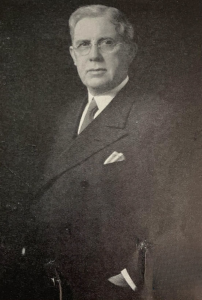
In Trumansburg, on September 9, 1867, a son was born to F. Henry McLallen Thompson and Mary S. Bower. Frederick R. Thompson was one of several children born to the couple, and we know little about his early years. Frederick was educated at schools in Trumansburg, later graduating with a degree in dental surgery from the Philadelphia Dental College. Sources indicate that Frederick moved to Homer after graduating from dental school, probably around 1889-1890. He set up his office and got to work treating patients on South Main Street.
As the new guy in town, there was probably a lot of interest from the young ladies in Homer for this young bachelor, and while we have no information to indicate how Fanny and Frederick met, it was most likely at church or a social event in the community. The couple wed in Homer on September 19, 1894, and settled into living in the village with Brockway relatives close by. Children were not to be for Fanny and Frederick, though we don’t know if it was a choice they made or fate that made the decision for them. Perhaps because they did not have children, they were more connected to the community and to the needs of people around them. Fanny and Frederick were helpers in the community, the type of people who see problems and create solutions that change lives.
Fanny was involved in the Home for Aged Women and a member of their board, as was her sister Florence. Florence was a young widow who raised her child with the help of her extended family, and later on she served as the longtime president of the Board of Managers of the Home for Aged Women. The Brockway children seemed to have a penchant for making lives better, and philanthropy ran deep in their veins. With her brother George, Fanny established the Brockway Foundation in 1928 as a nonsectarian fund to be utilized to bring comfort and aid to those in need in Homer. George provided funds for a variety of other organizations that enriched the community as well. Fanny was a member of the Homer Congregational Church, the Twentieth Century Club, the YWCA, the Homer Garden Club, and the Cortland County Historical Society. As a member of the Cortland County Historical Society, she donated many early and invaluable objects of historical significance to the museum collection, so we know she was interested in preserving history. In her obituary, she was remembered as “one of the most active community and welfare workers,” and she left almost a quarter of a million dollars to family and charities upon her death in 1954.
Frederick and Fanny were well matched because both valued giving back to the community. Frederick was one of those men who seem to live multiple lives all at once because of how much he managed to pack into his life! As mentioned previously, Frederick was a dentist, and he practiced in Homer for about fifteen years. In 1905, he was elected as president of the village of Homer. In 1906, he and Fanny moved to New York City where he pursued a career in real estate, however, they returned to Homer in 1912 when George Brockway organized the Brockway Motor Truck Company. He was there to assist with the leap from carriages and wagons to trucks, and he served as secretary and treasurer of the company until 1929 when he resigned, though he remained on the board.
Cortland was a village with a president before it was incorporated as a city in 1900, after which it had a mayor at the helm. In 1934, Frederick Thompson was elected as the first Democratic mayor in the city’s history, and it was said that it was due to his popularity and work ethic that people voted for him. He served a two-year term. In addition to serving as a political leader, Thompson was a leader in organizations that improved lives in the community. Thompson served for thirty years as a director of the Homer National Bank, president of the board of the Cortland County hospital, trustee for the Home for Aged Women in Homer, trustee for the YWCA, president of the Brockway Foundation, and trustee for the Homer Academy Board of Education. As for fraternal and member organizations, he was a member of the Homer Lodge, No. 352, Freemasons; the Rotary Club; the Cortland Country Club; the Cortland County Sportsmen’s Association; and the Chamber of Commerce. Frederick was an active member of the Cortland County Red Cross, serving as president for ten years, and he was the chairman of the Cortland County Board of Health.
There are undoubtedly philanthropical endeavors for both Fanny and Frederick that we will never know about because evidence has been lost to time. However, there is one organization they both held dear to their hearts—the Far View Health Camp for underprivileged children in Cortland County. Frederick purchased land for the camp, and Fanny served as a trustee. The camp was supported by fundraising, private donations, and appropriations from the Cortland County Board of Supervisors. Children received plenty of food, fresh air and sunshine, lots of playtime, and instruction on how to care for themselves. The camp provided opportunities for children to learn and flourish in a clean and healthy environment. Frederick visited the camp every Sunday and brought the comics to the children to read. The camp provided a way for the Thompsons to help raise many children, as it were.
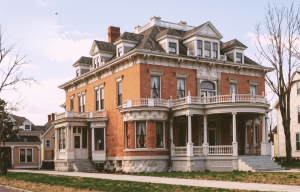
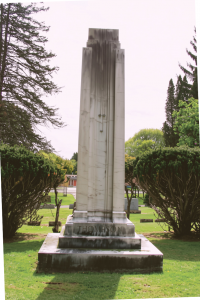
Every community has visionaries who bring about positive change, and in this case, Fanny and Frederick were a dynamic force who made a real impact in our community. Their story started in Homer and ended in Cortland at 45 Tompkins Street, and they never stopped working to create a better place to live for all. Both Fanny and Frederick found a final resting place at Glenwood Cemetery, where a tall, stately monument stands to attest to their time on Earth. ~Tabitha Scoville, CCHS Director